The Strangers' Tomb by Robin Hazard Ray
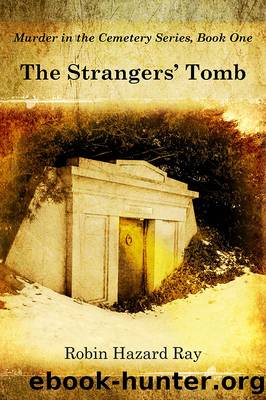
Author:Robin Hazard Ray [Ray, Robin Hazard]
Language: eng
Format: epub
Publisher: BookBaby
Published: 0101-01-01T00:00:00+00:00
14 April 1858
Roxanne showed herself upstairs as Bascomb tried to recover his composure. Adelaideâs airless room, into which Roxanne was beckoned after knocking, was immediately oppressive. Perhaps those used to this odor learned not to smell it, she thought.
Roxanne made a slight curtsy and then stood motionless, bonnet in hand, as Adelaide eyed her. Even in the low light of the gas fixture, Roxanne could see how wasted the widow was, and how divorced from the world. Yet this was the woman who, under the pen name âMinerva,â riveted thousands of readers with her erudite essays on slavery in antiquity, based on the study of classical literature and law, and her passionate denunciations of American Negro bondage. Not many knew the writerâs true identity, but among the close circle of Boston abolitionists it was an open secret.
Adelaideâs research had dug far into the annals of Egypt, Greece, Rome, and Persia. âPartisans of the status quo,â she had written in her first published essay, âappeal to Antiquity in support of their cause. It is worth investigating whether their evidence, taken as a whole, supports their claims. Even as we delve into the past, we shall thus be keeping the modern problem in our sights.â Combing through recent finds in archaeology, the evidence of Egyptian tomb paintings, the dramas of Sophocles and Euripides, the histories of Xenophon and Herodotus, the legal codes of Hammurabi and Judea, âMinervaâ had interrogated, goaded, and discredited the self-justifications put abroad by Southern slave owners: that theirs was a beneficent institution, taking paternal care of an imbecile and incompetent race; an institution ennobled by its use in the revered Roman Republic, upon which the new United States sought to model itself.
She had mined Columella, Plato, Strabo, Lysias, Homer. How did the language in which slaves were discussed reflect differences between the ancient practice and the modern race slavery? Did the late coinage of the word andrapoda for âslaveââclearly derived from the word tetrapoda, or four-legged beastâreflect some change in the Greeksâ regard for the enslaved? How did the existence of âpublic slavesâ in Romeâthose charged with tending the public baths or policing the streetsâaffect the civitas? And why did slavery die out as the Roman Empire collapsed?
âMinervaâ had turned the evidence of Antiquity back upon the slaveholders. It was not inherent racial qualities but degradation, dependence, and desperation that turned slaves into shambling, conniving, dishonest varlets, she argued. Look at the plays of Aristophanes and Terence, she urged her readers. That recurring buffoon of Classical comedy, the rascal slave, was rarely an African and far more likely to have been a Greek from a conquered city, a Gaul taken as booty, a Pict as white as the author herself: those negative qualities that slaveholders claimed were innate to the Negro race were, to the contrary, engendered by their hopeless state of bondage.
Hers was a thrilling analysis, one from which Roxanne and many others had learned a great deal.
Adelaide spoke at last. âWhat is your name, please?â
âRoxanne Jacobs, maâam.
Download
This site does not store any files on its server. We only index and link to content provided by other sites. Please contact the content providers to delete copyright contents if any and email us, we'll remove relevant links or contents immediately.
The Secret History by Donna Tartt(19088)
Shot Through the Hearth by Kate Carlisle(18774)
Who'd Have Thought by G Benson(16583)
The Betrayed by David Hosp(12792)
Red by Erica Spindler(12574)
Kathy Andrews Collection by Kathy Andrews(11831)
Scorched Eggs by Childs Laura(11353)
Thirteen Reasons Why by Jay Asher(8910)
(2T) A Bone to Pick by Harris Charlaine(7808)
Two Kinds of Truth by Michael Connelly(7441)
Heavenfield: A DCI Ryan Mystery (The DCI Ryan Mysteries Book 3) by LJ Ross(7213)
Small Great Things by Jodi Picoult(7142)
The Thirst by Nesbo Jo(6944)
The Space Between by Michelle L. Teichman(6941)
Pandemic (The Extinction Files Book 1) by A.G. Riddle(6540)
The Rosie Project by Graeme Simsion(6414)
The Vegetarian by Han Kang(6302)
Assassin’s Fate by Robin Hobb(6216)
Vow of Obedience by Veronica Black(5942)
